
DHA Multan Positioned Among Key Beneficiaries
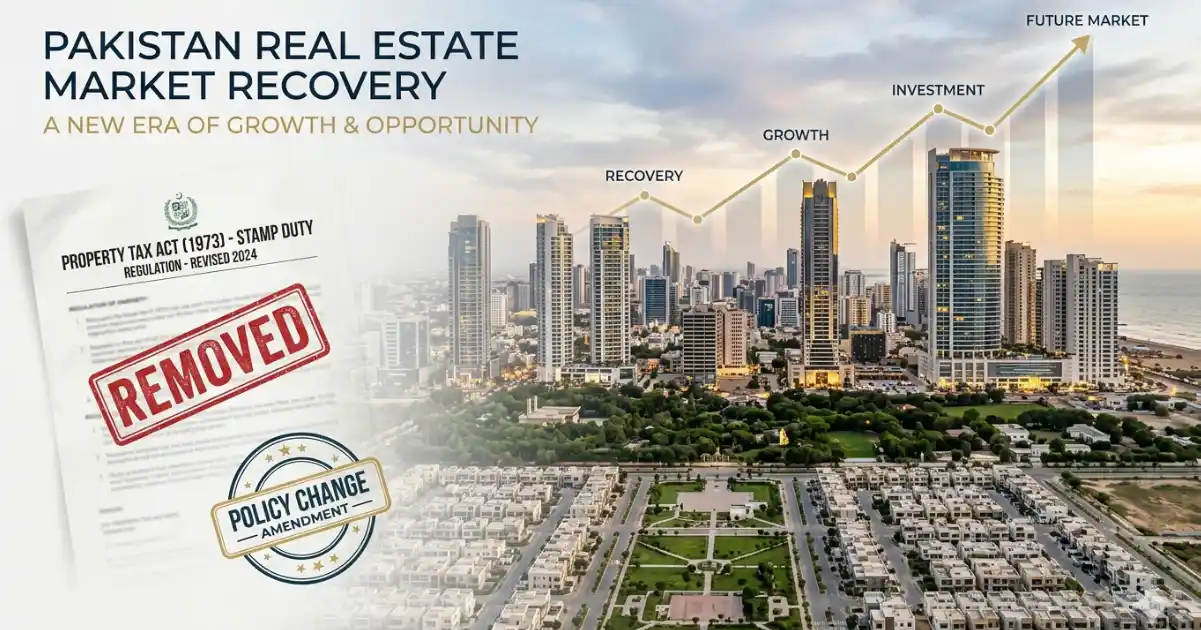
Pakistan’s real estate sector has received another major relief after the Federal Constitutional Court struck down Section 7E of the Income Tax Ordinance 2001, declaring it unconstitutional.
The decision is being widely welcomed by investors, builders, developers, and overseas Pakistanis because Section 7E had become one of the biggest holding burdens on property investment in recent years.
This move follows another important correction already made by authorities — the revision and reduction of DC/FBR property valuation rates in several areas, including DHA Multan.
Together, these steps indicate that policymakers are gradually moving toward a more practical and investment-friendly real estate environment.
What Was Section 7E?
Section 7E was introduced through the Finance Act 2022 and imposed tax on “deemed income” from immovable properties.
In simple terms:
- Investors were taxed even if the property generated no actual income
- Vacant plots and investment properties became subject to annual taxation
- And long-term holding became increasingly expensive
The effective impact was roughly around 1% annual taxation on higher-valued properties based on FBR valuation.
This created significant pressure on:
- Genuine investors
- Overseas Pakistanis
- And long-term property holders
The Federal Constitutional Court has now declared the provision void, and all proceedings under Section 7E have been set aside.
First Step: Correction of DC Rates
Before the abolition of Section 7E, another important development had already started improving market sentiment — the downward correction of DC/FBR rates.
For years, unrealistic valuation tables created a mismatch between:
- Actual market value
- Taxation value
- And transaction feasibility
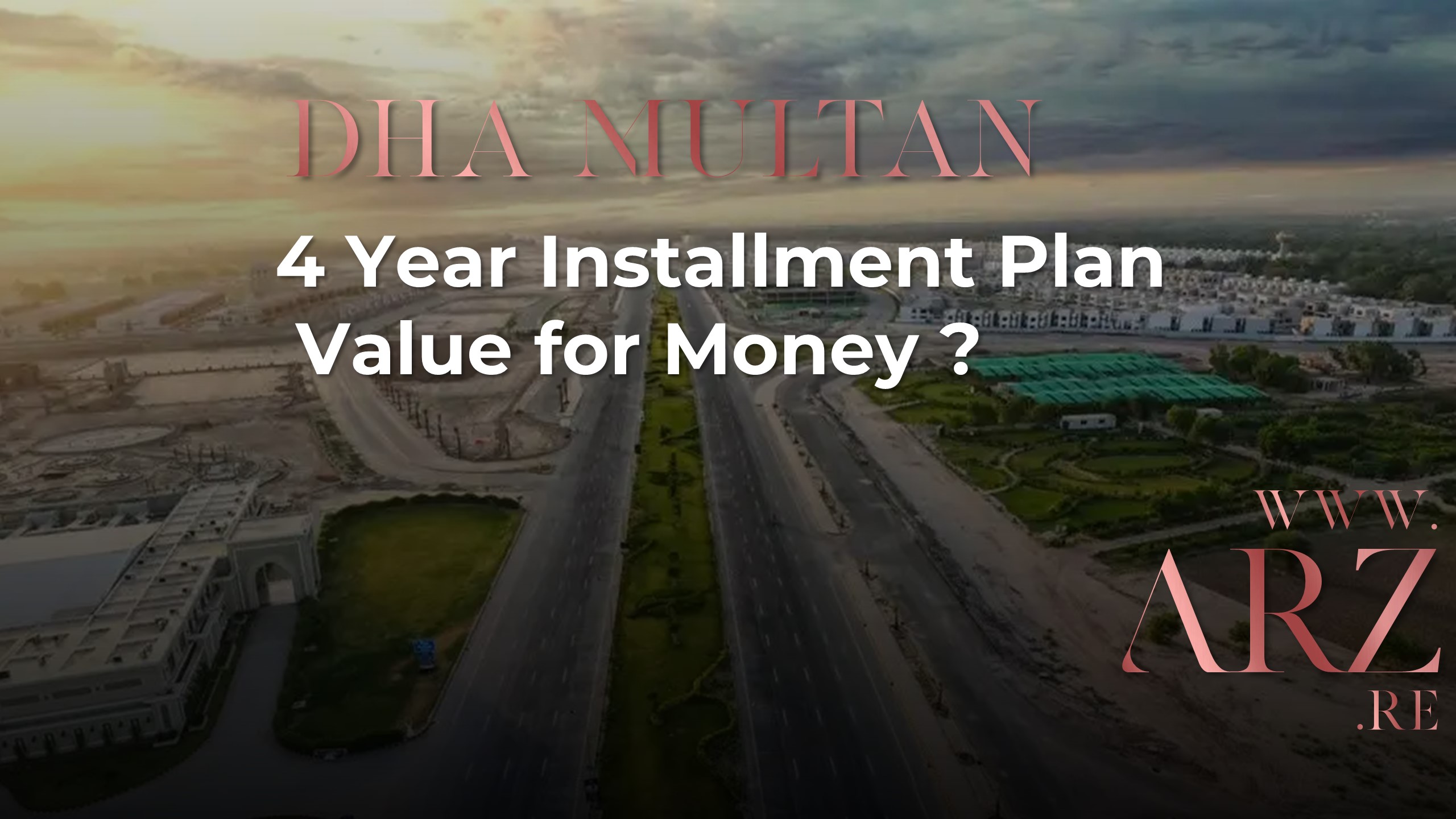
In projects like DHA Multan, revised valuation rates reduced transaction pressure and improved investor confidence.
That was the first meaningful signal that authorities were beginning to acknowledge the ground realities of Pakistan’s real estate market.
The abolition of Section 7E now becomes the second major corrective measure.
Why This Matters for DHA Multan
DHA Multan is currently transitioning from a speculative market into a development-driven market.
Several sectors are now substantially developed, including:
Sector M, Sector Q, Sector R, Sector U, Sector B1, Sector H, Sector G, Sector N, Sector V, Sector A, Sector I, and Sector C.
Meanwhile:
Sector O and Sector D are under active development.
This matters because real estate markets strengthen sustainably when:
- Development becomes visible
- Construction activity increases
- Population starts moving in
- And infrastructure begins supporting real usability
DHA Multan is now gradually entering that phase.
Sector B1 & Sector V — Key Growth Zones
Sector B1
Sector B1 is emerging as a premium mid-sized residential sector because it is:
- Located near Rumanza
- Surrounded by 1 Kanal and 2 Kanal premium sectors
- Adjacent to farmhouse zones
- And witnessing heavy construction activity
Since the sector mainly contains:
- 8 Marla plots
- And 10 Marla plots
it attracts genuine builders and middle-to-upper-middle-income buyers.
Estimated Market Impact
- 8 Marla: PKR 32–40 Lac → PKR 38–48 Lac
- 10 Marla: PKR 45–58 Lac → PKR 52–68 Lac
Sector V
Sector V is gaining importance because of its proximity to Education City.
Major institutions including:
- NUST
- NUML
- FAST
- University of South Punjab (USP)
have reportedly committed within the zone.
Educational infrastructure typically creates:
- Population growth
- Rental demand
- Commercial expansion
- And long-term land appreciation
This positions Sector V among the strongest future growth corridors in DHA Multan.
Estimated Overall Impact on Plot Prices
Based on current market activity, ARZ listings, and investor sentiment, the abolition of Section 7E may gradually improve plot values across DHA Multan.
- 5 Marla: PKR 26 Lac → +10% to +15%
- 8 Marla: PKR 37 Lac → +10% to +16%
- 10 Marla: PKR 50 Lac → +12% to +18%
- 1 Kanal: PKR 95 Lac → +15% to +22%
Will This Create a Real Estate Boom?
The answer is: positive impact, yes — but not an immediate or artificial boom.
Pakistan’s real estate slowdown was never caused by taxation alone.
The market has also been affected by:
- Political uncertainty
- Economic instability
- Currency pressure
- Investor fear
- And inconsistent policy direction
Therefore, while:
- DC rate correction
- And abolition of Section 7E
are definitely steps in the right direction, they are part of a larger recovery process rather than a complete solution on their own.
The Real Key: Political Stability
One of the biggest drivers of Pakistan’s property market has always been overseas Pakistani investment.
Historically, whenever overseas confidence improves:
- Property transactions increase
- Liquidity improves
- And long-term investment returns strengthen
At present, many overseas investors are watching Pakistan carefully but remain cautious primarily due to political uncertainty rather than taxation alone.
If Pakistan achieves:
- Better political stability
- Policy consistency
- And long-term economic direction
it could unlock significant overseas investment inflows into real estate.
That may ultimately become the biggest catalyst for sustainable growth.
Conclusion
The abolition of Section 7E represents another important correction in Pakistan’s real estate policy framework.
First came the correction of unrealistic DC/FBR rates.
Now comes the removal of a controversial holding tax that discouraged long-term investment.
These are constructive and investor-friendly steps.
For DHA Multan, the impact is likely to be especially positive because:
- Development is progressing
- Construction activity is increasing
- And sectors like B1 and V are showing strong future potential
However, the market’s long-term recovery will depend not only on taxation reforms but also on broader political and economic stability.
Real estate confidence grows when investors feel secure about the future.
If Pakistan can provide that stability, overseas investment may return strongly — and that could become the real engine of growth for projects like DHA Multan and the wider property market.